

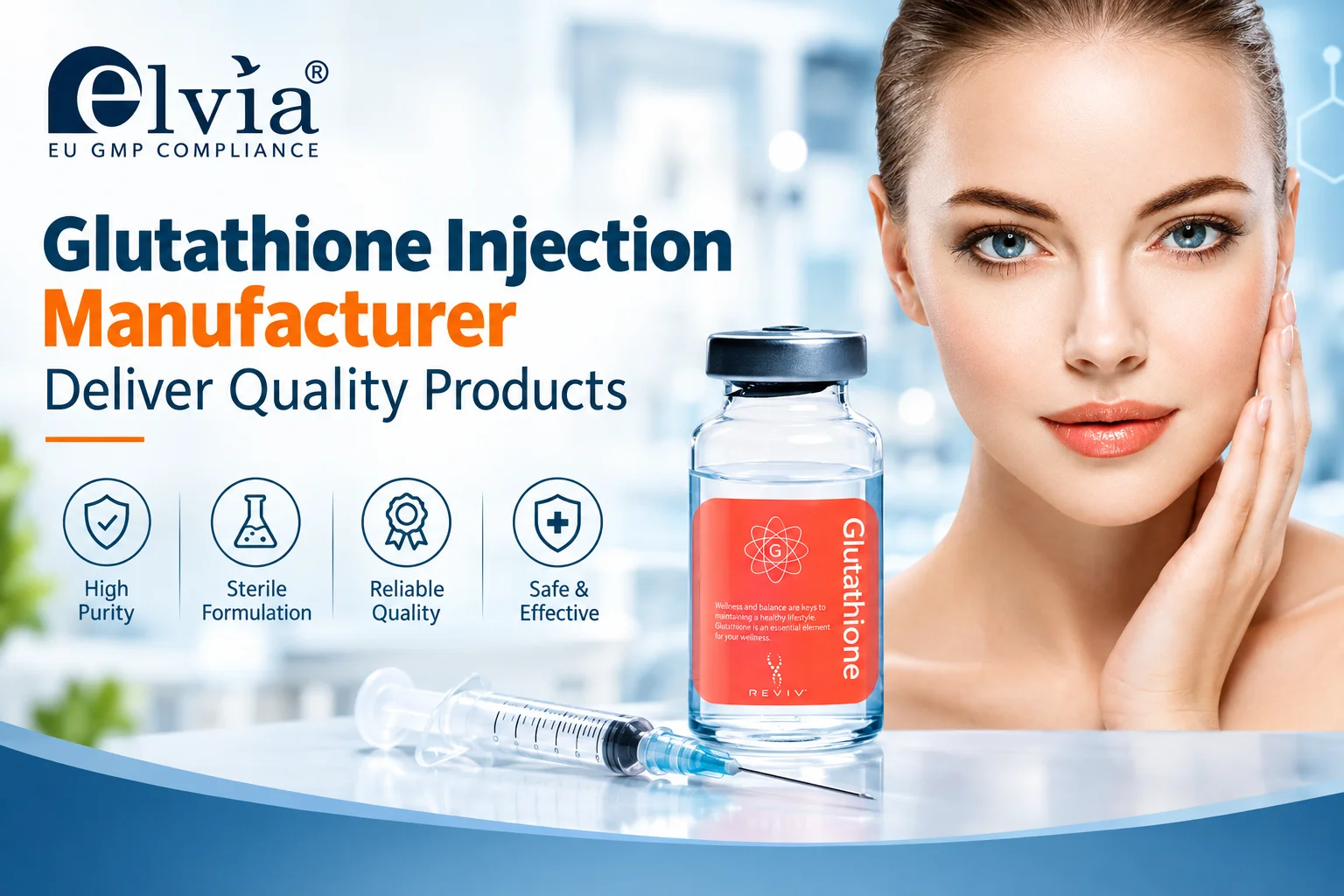
Manufacturing glutathione injections is a pharmaceutical process that requires particular formulation, precise manufacturing, and relevant quality control. Although public discussions are often focused on the use of glutathione, the manufacturing aspect of the matter needs attention, too. For pharmaceutical companies, clinics, distributors, and healthcare businesses, product quality depends heavily on consistency across formulation, filling, quality control, packaging, and storage.
This is why choosing a Glutathione Injection Manufacturer involves more than just comparing price per unit or the manufacturer’s capacity.
Why Is the Manufacturing of Glutathione Injections Special?
Injectable medications require stricter controls because the product is designed to be introduced into the patient’s body. Therefore, the manufacturing of any injectable product has to take into account such aspects as formulation, sterility, filling accuracy, container integrity, and stability.
With glutathione injections, it is especially crucial to maintain the intended formulation through all stages of manufacturing and storage. The manufacturer must develop processes for working with raw materials, formulating the medication, filling the vials, and controlling finished batches.
What Kind of Quality Control Is Relevant during Production?
It is necessary to perform the quality check not only after filling the injection but also at different stages of the manufacturing cycle.
- Raw materials must be checked against certain standards.
- With controlled processes, the consistency of each batch may be maintained during production.
- The finished products may be subject to appropriate testing to identify their parameters, including appearance, composition, sterility, and packaging.
The idea is quite simple: each batch that meets predetermined quality standards may be allowed to continue its way through the supply chain.
Why Are Manufacturing Conditions Important?
The manufacture of sterile drugs takes place in a controlled environment since contamination may negatively affect the integrity of an injectable pharmaceutical product. Cleanroom practices, validations, qualified staff, and equipment contribute to the control of manufacturing.
Packaging is important for the protection of a product and its subsequent storage, transportation, identification, and traceability.
Thus, a manufacturer that has already developed systems provides a certain level of reliability regarding batch uniformity and product handling.
How Should Businesses Choose a Manufacturer?
Pharmaceutical companies should take into account not only the product offering when choosing their manufacturing partners. Regulatory compliance, quality systems, manufacturing capabilities, documents, production capacities, and logistics services can impact the relationship.
For companies producing pharmaceuticals for international markets, regulatory experience is particularly valuable since each country may have different product requirements. According to Elvia Care, it follows WHO-GMP, PIC/S, and EU-GMP-compliant quality standards and provides pharmaceutical development, manufacturing, and regulatory services.
Why Is Batch Consistency Important?
Consider the situation when you order a pharmaceutical product multiple times and receive distinctly different results regarding its quality and appearance. It will cause difficulties related to product inventory, regulatory documents, and customers.
Batch consistency helps pharmaceutical companies ensure predictable quality of products.
Why Batch Consistency Matters?
Picture yourself ordering the same pharmaceutical item repeatedly and getting something that varies significantly from what you expected in terms of quality or presentation. This could be a challenge both in terms of inventory control and regulatory compliance.
The batch consistency allows pharmaceutical firms to keep the quality of their product consistent. This involves having documented procedures, a controlled manufacturing process, appropriate testing and a proper release process.
Therefore, for Glutathione Injection Manufacturer, batch consistency is more than just a goal during the manufacturing process. It is an important aspect of developing a reliable pharmaceutical supply chain.
Questions to Ask a Glutathione Injection Manufacturer
Prior to entering into a manufacturing agreement, inquire about the following issues: quality certifications of the company, manufacturing facility, testing, documentation, packaging options, minimum production requirements and regulatory services.
It may be beneficial to know if the company is able to offer additional services besides the manufacturing of a drug. For example, development, regulation and packaging can help in developing a mutually convenient manufacturing agreement as your requirements evolve.
Elvia Care is a pharmaceutical manufacturer with injectable products that provides development, manufacturing and regulatory services to its clients. Also, formulations are available in more than 25 countries.
Are you searching for a Glutathione Injection Manufacturer? Contact Elvia Care to discuss your pharmaceutical manufacturing needs.
FAQs
GMP adherence, manufacturing facilities, quality control system, testing protocols, documentation, packaging facilities, regulatory knowledge, and manufacturing capacity are all aspects to consider.
Sterility is critical to any injection, as contamination may lead to serious quality and safety issues. Controlling the environment and conducting tests can help maintain the quality of the product.
Having consistent batches makes inventory management, quality documentation, regulation, and product distribution easy for the business.
Yes. Proper packaging helps to preserve the formulation in good condition during storage and transportation.
Yes. Elvia Care has a Glutathione Injection Manufacturer page on their website.